

Key Takeaways
Unity Catalog centralizes metadata, access control, and lineage inside Databricks. Coalesce complements it by standardizing transformations, documentation, and cross-platform lineage—so hybrid stacks operate under one set of reusable, governed patterns.
- Unity Catalog centralizes governance, access control, metadata, and lineage inside Databricks so data is secure and discoverable across workspaces and clouds.
- Most enterprises are multi-platform (i.e. Databricks + Snowflake + Fabric+BigQuery)
- Unity Catalog + Coalesce is a complementary pairing: Unity Catalog governs data within Databricks, while Coalesce standardizes transformations, documentation, and lineage across platforms, creating a transformation-first control plane for hybrid environments.
What Is Databricks Unity Catalog?
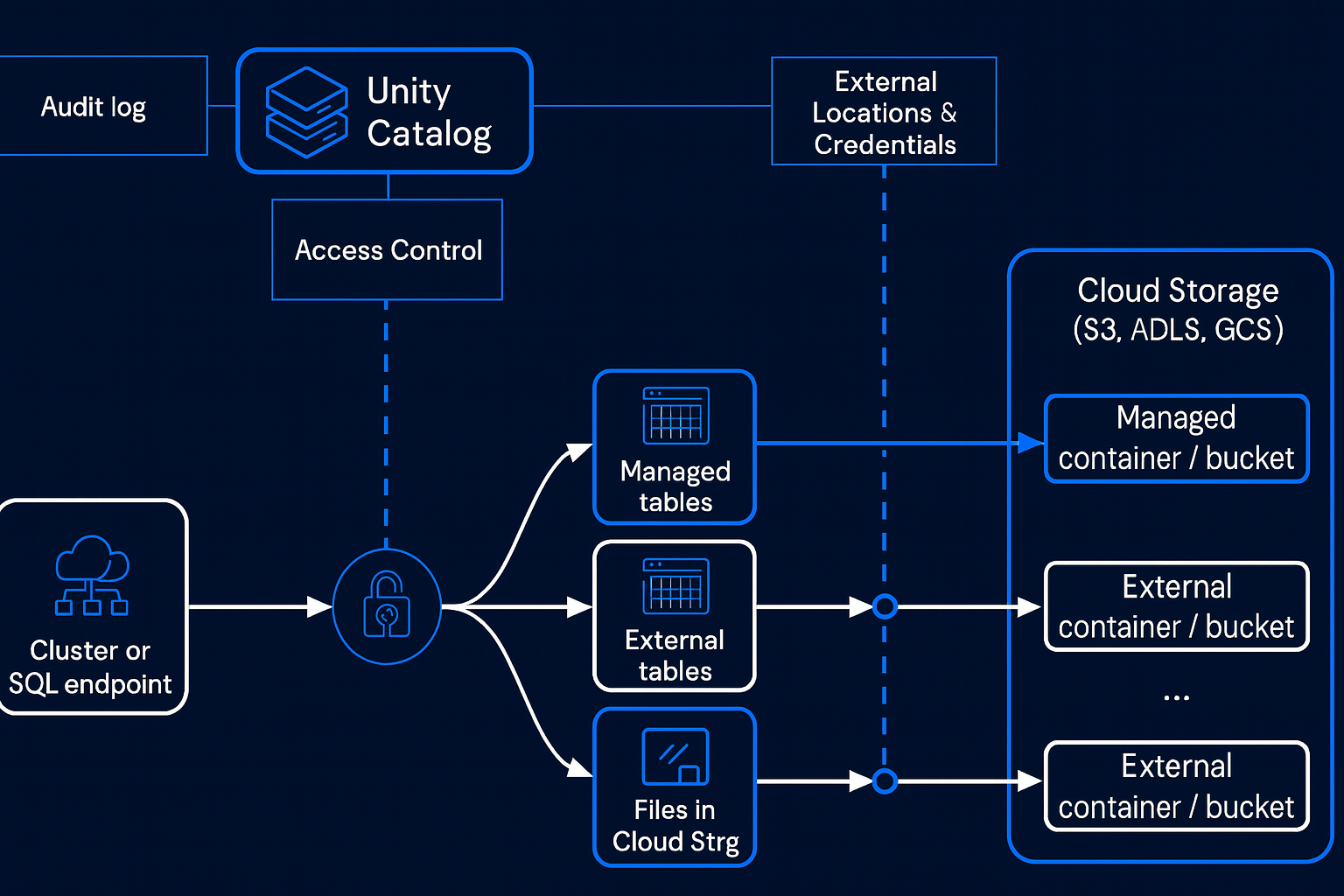
Unity Catalog is Databricks’ unified governance layer that centralizes metadata, access policies, and lineage across Databricks workspaces, regions, and clouds. It standardizes how teams discover, protect, and audit data used for analytics and machine learning.
Cloud object stores (S3, ADLS, GCS) weren’t built with table/row/column-level governance or consistent multi-cloud controls. Unity Catalog adds a consistent, fine-grained governance layer to the Lakehouse, so teams can enforce policy, track usage, and manage assets from a single service.
Core capabilities
- Metadata management: Centralized schemas, descriptions, ownership, tags—shared across workspaces to reduce duplication and provide context.
- Unified access control: Define policies from catalog → schema → table → column. Enforce consistently across SQL, notebooks, ETL/ELT, ML. Auditable by design.
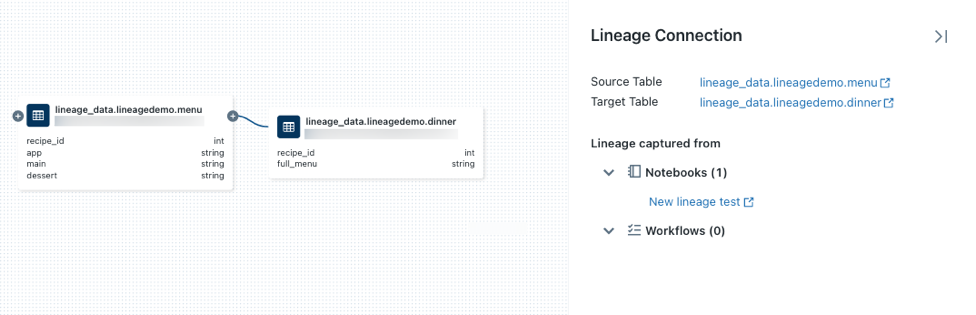
- Data lineage: Auto-capture lineage from SQL, notebooks, Delta Live Tables, and ML pipelines to trace issues, assess downstream impact, and support audits.
- Data discovery: Searchable metadata with previews, tags, and lineage so users can find trusted datasets and models without tribal knowledge.
Architecture & deployment (at a glance)
- Deployed in your cloud tenant, integrated with your identity provider (e.g., Okta/Azure AD).
- Central metastore registers catalogs, schemas, tables, views, and ML models.
- Policies and lifecycle rules are managed at workspace and account levels, with access events logged for compliance.
Benefits
- Security & compliance: Fine-grained controls, auditable access, consistent policy.
- Productivity: Search + context accelerates self-service analytics and ML.
- Reliability: Lineage shortens root-cause analysis and reduces breakage.
- Scale: Workspace- and region-spanning governance aligned to the Lakehouse.
Scope
Cloud object stores weren’t built for analytics. Amazon S3, Azure Data Lake Storage, and Google Cloud Storage offer basic access control at the file or folder level—but not the column-, row-, or table-level governance needed in enterprise environments. And each cloud has its own API conventions, making multi-cloud consistency nearly impossible.
Unity Catalog was developed to bridge this gap. It brings a standardized governance layer to the Databricks Lakehouse, allowing teams to enforce fine-grained access policies, track data usage, and manage assets from a central location. As companies grow more data-driven and compliance-heavy, Unity Catalog helps protect data while enabling innovation.
Unity Catalog’s deepest governance and lineage strengths are within the Databricks ecosystem. If your data estate spans Snowflake, Microsoft Fabric, BigQuery, Redshift, or domain-specific systems, you’ll likely pair Unity Catalog with a cross-platform transformation/governance layer to avoid silos.
How Coalesce complements Unity Catalog
As enterprises increasingly operate across multiple data platforms, Unity Catalog alone isn’t enough. To make data truly usable, governed, and reusable across your data stack, companies are turning to metadata-driven platforms like Coalesce—which provides a unified interface for transformation, lineage, and cataloging across Snowflake, Databricks, Microsoft Fabric, and beyond.
Coalesce integrates directly with Databricks using its APIs and workspace architecture. But unlike other tools, it also connects with non-Databricks systems, enabling teams to design once and deploy anywhere—without rebuilding pipelines or duplicating logic.
Governance:
- Unity Catalog governs access & metadata for assets in Databricks.
- Coalesce governs the transformation layer and documentation across Databricks, Snowflake, Microsoft Fabric, and more—so standards travel with your pipelines, not just with a single platform.
Lineage:
- Unity Catalog tracks lineage for Databricks-native workloads.
- Coalesce unifies column- and table-level lineage across platforms to give data leaders one map for impact analysis, observability, and audits.
Policy enforcement in practice:
- Unity Catalog defines and enforces access policies.
- Coalesce makes those policies operational by embedding reusable templates, contracts, and transformation patterns so builds comply by default.
Discovery & documentation:
- Unity Catalog surfaces searchable metadata and lineage inside Databricks.
- Coalesce Catalog adds AI-assisted definitions, ownership, usage, and transformation history across platforms, increasing reusability and trust.
Why this pairing matters in the real world
- Most enterprises run hybrid stacks due to M&A, domain autonomy, or use-case fit. Unity Catalog + Coalesce lets you:
- Maintain consistent standards for transformations and documentation across Databricks, Snowflake, and Fabric.
- Perform cross-platform impact analysis from a single lineage graph.
- Design once, deploy anywhere without rebuilding logic when architectures evolve (e.g., adding domains, moving workloads, adopting Iceberg-based sharing).
Example scenarios
- Regulated analytics: Unity Catalog controls access to sensitive fields in Databricks; Coalesce enforces standardized transformations and column-level lineage for end-to-end auditability across Databricks + Snowflake reporting.
- Domain data products: Domain teams build with reusable templates in Coalesce; Unity Catalog ensures governed access to Delta/Unity assets used by those products.
- M&A integration: Keep Databricks governed by Unity Catalog while Coalesce normalizes transformations and documentation for acquired teams operating on Snowflake or Fabric.
Architecture (how Coalesce + Unity Catalog comes together)
- Unity Catalog remains the system of record for access control and metadata inside Databricks (via your metastore and IdP).
- Coalesce connects via native APIs/workspace constructs and also integrates with non-Databricks systems to orchestrate transformation-first governance (templates, contracts, docs, lineage) across your data estate.
- Planning an Iceberg strategy? Coalesce helps standardize build patterns and lineage while Unity Catalog governs Databricks access—so shared data remains both portable and controlled.
See Coalesce and Databricks in action
Unity Catalog is a major step forward in governance for the Databricks ecosystem, and its capabilities are expanding quickly. Still, most enterprises operate in hybrid environments where data spans multiple clouds and platforms.
Coalesce complements this by providing a transformation-first control plane with lineage and governance that already extends across Snowflake, Databricks, Microsoft Fabric, and more. Together, they give teams the flexibility to govern data wherever it lives, while preparing for an increasingly interconnected future.
Want to see how Coalesce integrates with Unity Catalog and other platform governance tools? Book a demo today.
Frequently Asked Questions
A unified governance layer for Databricks that centralizes metadata, fine-grained access control, and lineage across workspaces and clouds.
Inconsistent object-store controls and multi-cloud complexity. It provides table/row/column-level policy, searchable metadata, and auditable access.
Unity Catalog governs data within Databricks. Coalesce complements it by adding transformation governance, multi-platform lineage, and AI-powered metadata management across Snowflake, Databricks, Microsoft Fabric, and more.
It auto-captures lineage from SQL, notebooks, Delta Live Tables, and ML pipelines to trace dependencies and downstream impact.
Its deepest capabilities target Databricks workloads. Many enterprises pair it with cross-platform tooling for hybrid estates.
Coalesce standardizes transformations, documentation, and cross-platform lineage, extending governance beyond Databricks.
They’re complementary: Unity Catalog focuses on in-Databricks governance; Coalesce focuses on transformation-first, multi-platform governance.
Yes. Define access in Unity Catalog for Databricks; use Coalesce templates and contracts so builds comply consistently across other platforms.