

Key Takeaways
Data sharing accelerates decision-making, but unmanaged it creates privacy, security, and compliance risks. The key is balance: document PII and its purpose, enforce role-based access and data minimization, and maintain lineage and logs to prove compliance. With the right safeguards, companies can share data confidently while protecting trust and meeting regulations like GDPR and CCPA.
Sharing data across teams helps companies move faster—but it also raises legitimate concerns about privacy and security. And with regulations like GDPR and CCPA in play, good intentions aren’t enough. You need clear safeguards, access controls, and proof that you’re following the rules.
In this article, we’ll explore how to implement effective data sharing practices while staying compliant with privacy and security regulations. We’ll cover:
- Why data sharing and compliance often feel at odds
- The privacy risks companies face—and how to document your way out
- Security challenges and how to mitigate them through access controls
- How to demonstrate compliance through lineage and audibility
Let’s break it down.
Data sharing: Why privacy and security can feel like roadblocks
At its best, data sharing helps everyone—from analysts to executives—make better decisions. That means reducing friction: minimizing gatekeeping, increasing discoverability, and giving teams easy access to the data they need.
But data privacy and security are about limits: protecting sensitive information, controlling access, and proving compliance. Naturally, it can feel like these goals are in tension.
Regulations like GDPR and CCPA add another layer of complexity. It’s not enough to comply—you have to demonstrate compliance. If you can’t show who accessed data, for what purpose, and under what controls, your organization could be deemed noncompliant.
The good news? You don’t have to choose between data sharing and data protection. You just need the right strategies.
Data privacy: controlling what gets shared and why
Privacy is about giving individuals control over their personal information. In practice, this means limiting how personally identifiable information (PII) is used and shared across your business.
The most important principle here is purpose limitation: PII must only be collected and used for clearly defined, legitimate purposes—and those purposes must be communicated before data collection begins.
For example, if a customer provides their email address for order delivery, that data can’t be reused for marketing without their consent. Simple enough—until that dataset is shared across departments, with people who weren’t there when the data was collected and don’t know the original purpose.
That’s how privacy risks multiply: not through bad actors, but through ambiguity and scale.
The fix: documentation and data sharing agreements
Clear, accessible documentation is your first line of defense. Every PII field should be labeled as such and include context on its intended use.
Let’s say your data contains a column labeled “email_address.” A helpful description might read: Customer email address collected for delivery notification purposes only. That context helps everyone—from data engineers to marketing analysts—understand the guardrails before using the data.
This documentation shouldn’t live in a spreadsheet or somewhere only technical users can access. It should be part of your data catalog—ideally one designed for collaboration between technical and nontechnical teams. With features like search, column-level lineage, and business-friendly descriptions, a modern catalog helps users understand how data can be used—without needing to chase down the data team.
For high-stakes or interdepartmental use cases, consider formalizing data use expectations in a data sharing agreement (DSA). A DSA outlines:
- What data is being shared
- Who can access it
- Why it’s being shared
- Restrictions on reuse
- Safeguards for storage and transfer
It’s not just for enterprise data exchanges—internal DSAs help build accountability and cross-team trust.
Data security: making sure the right people have access
While privacy is about purpose, security is about protection. It’s the set of technical and organizational measures that keep data safe from unauthorized access, alteration, or destruction.
Opening up access to more users—even with good intentions—creates more surface area for risk. That includes:
- External threats (e.g., breaches, malware)
- Internal risks (e.g., accidental misuse, insider threats)
- Operational vulnerabilities (e.g., storing data in too many places, lack of monitoring)
The goal isn’t to lock everything down—but to ensure that the right people have the right level of access, for the right reasons.
The fix: role-based access controls and data minimization
Start with access controls. Users should only see what they need—no more, no less. Whether you’re assigning access at the workspace, table, or column level, it helps to define clear roles for each type of user and automate permissions accordingly.
Next, minimize the data being shared. If a business team doesn’t need PII fields to do their job, don’t include them. Masked or anonymized data can often serve the same purpose with far less risk.
Together, these practices help reduce the likelihood of both accidental exposure and intentional misuse—while still supporting the business with high-quality data. Many modern platforms offer secure data sharing capabilities with built-in access management. A centralized catalog further supports this by clearly labeling sensitive fields, showing lineage, and offering audit logs for traceability.
Accountability: proving compliance with lineage and logs
Privacy and security controls only get you so far. Regulations require that you show your work. This is where the accountability principle comes in: you must be able to demonstrate that proper safeguards are in place—and working.
There are two powerful ways to do this:
- Data lineage shows where your data came from, how it’s transformed, and where it flows downstream. This makes it easier to identify who’s using sensitive data, and for what.
- Query history logs what actions were taken on a dataset, by whom, and when. This provides a paper trail for compliance audits and internal reviews.
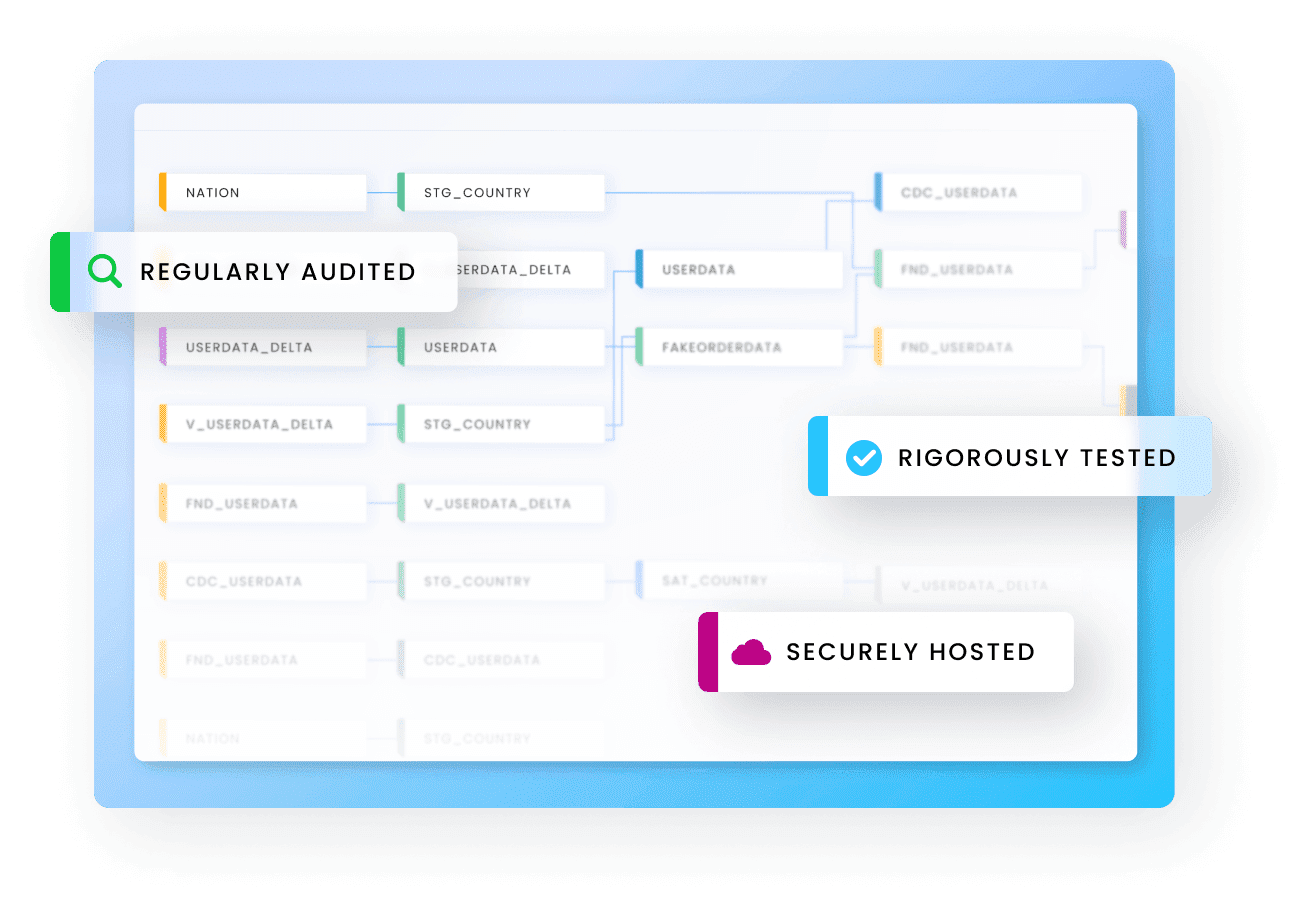
A modern data catalog can help here too. When you can trace a column all the way from its source to the dashboards it powers—and see who queried it last—you’re in a strong position to answer tough questions from regulators or security teams.
Final thoughts: you don’t have to choose between access and safety
Privacy and security don’t have to be blockers to data sharing. With thoughtful documentation, smart access controls, and clear auditability, you can share more data with more users—without opening your organization up to risk.
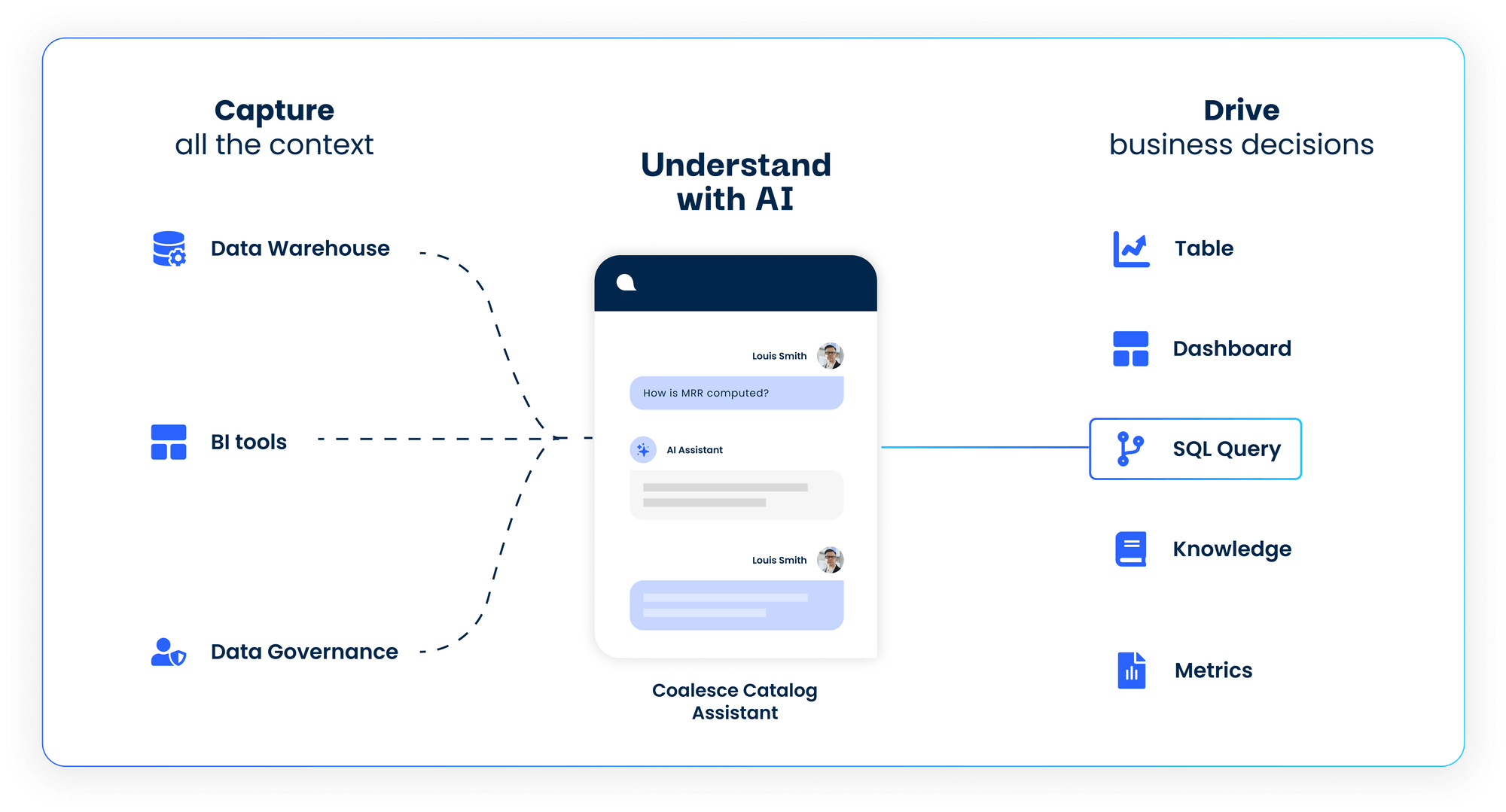
At Coalesce, we believe that data governance should feel like a feature—not a chore. That’s why our Catalog is designed to help teams flag sensitive data, document usage constraints, and manage permissions—all in a platform built for scale.
- Want to see how it works in practice? Explore Coalesce Catalog by taking a tour or scheduling a demo.
Frequently Asked Questions
Because data sharing aims to reduce friction and increase access, while compliance requires restrictions—limiting the use of personal data, controlling access, and proving safeguards. These goals can appear in tension, but a modern data catalog helps align them. By documenting sensitive fields, surfacing lineage, and providing business-friendly context, a catalog makes it easier for teams to share data responsibly while meeting privacy and security requirements.
Start with clear documentation of personally identifiable information (PII), including its intended use. Store this context in a data catalog so all users understand the guardrails. For high-stakes use, formalize expectations in data sharing agreements (DSAs).
Use role-based access controls to ensure users only see what they need, and apply data minimization so unnecessary PII isn’t shared. Masking or anonymization can further reduce risk while preserving data’s value.
Leverage data lineage to show where data comes from and how it’s used, and query logs to track who accessed it, when, and why. Together, these provide the audit trail required by regulations like GDPR and CCPA.